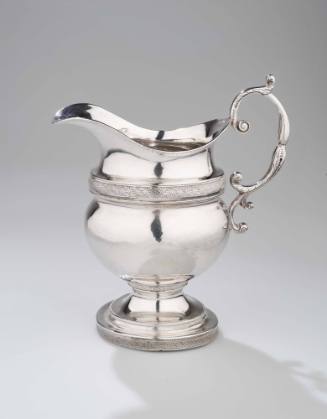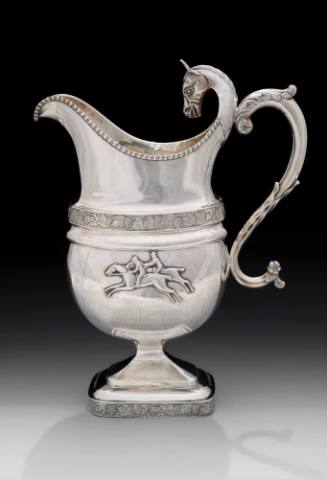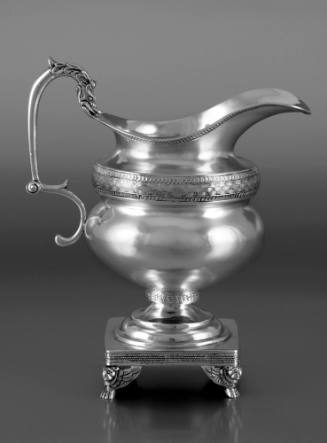
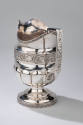
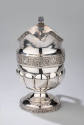
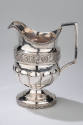
Cream Pot
Dateca. 1812-1830
Maker
William G. Forbes
1751-1840
Die Cutter
Moritz Fürst
1782 - 1840
MediumSilver
DimensionsHeight: 6 3/4"; Width across spout and handle: 5 3/4"
Credit LineMuseum Purchase, Hugh Trumbull Adams Fund
Object number2025-130,1
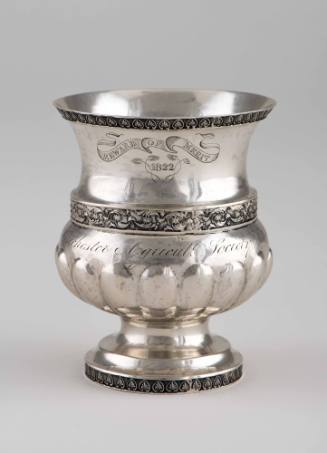
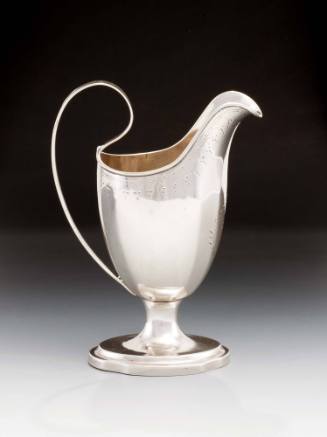
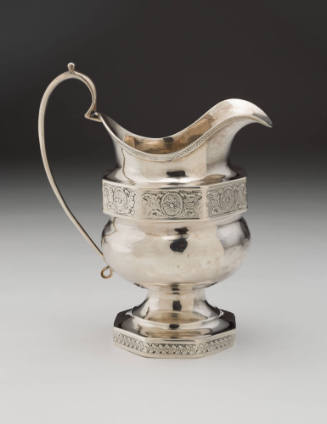
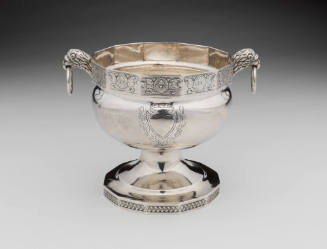
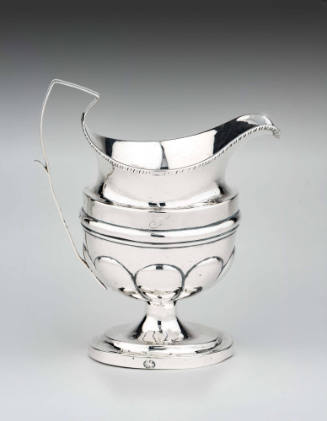
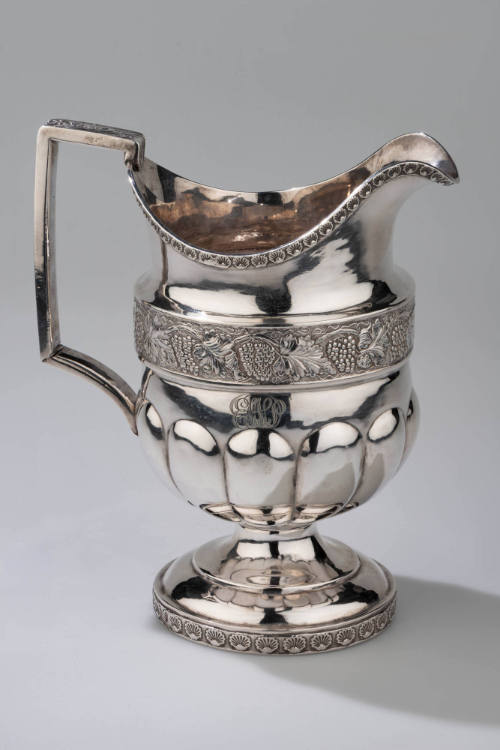
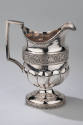
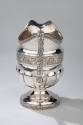
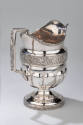
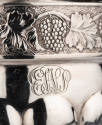
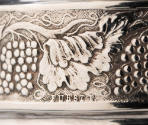
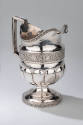
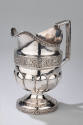
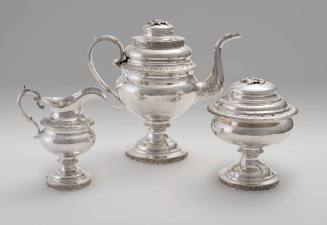
DescriptionSilver cream pot with a lobed, oval body set with a broad milled band composed of an undulating grape vine in relief, below an incurving neck and an everted pouring lip. Both the round foot and the lip of the body are edged in a narrow milled banding depicting a row of scallop shells in relief. It is carried by an angular strap handle with its outer surfaced set with a third milled banding, this one of scrolling foliage.Label TextOf a style that was extremely popular in large American cities during the second decade of the nineteenth century, this cream pot and waste bowl are the surviving components of an exceptional hot beverage service. Though wrought by a prolific New York City silversmith, these two pieces are remarkable for the milled bandings incorporated into their mid-sections.The dies used to create these broad bands, pressed with an undulating grapevine in relief were cut by Moritz Fürst, a Jewish medalist, artist, and die-cutter who came to the United States from what is now Slovakia in 1807.
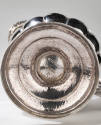
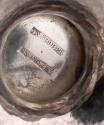
Today, Fürst is known for the superlative dies he cut for thirty three patriotic, military, and Presidential medals struck at the United States Mint. His best works are his War of 1812 series, along with his portrait medals of Dr. Benjamin Rush and Presidents Monroe and John Quincy Adams.Inscription(s)Body engraved with the owner's initials EWP in script cypher, below the central milled band on the right side.Mark(s)I.W.FORBES (overstruck) in relief within a rectangle struck twice within the foot, flanking the centering punch. Central milled banding pressed with FURST.F in relief along the lower border.
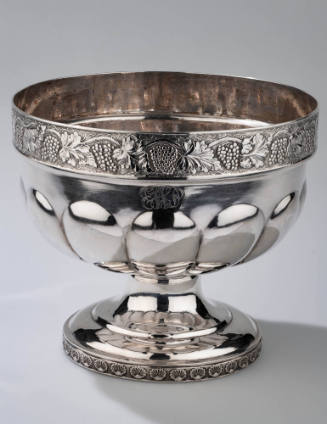
Jehu Williams (1788-1859) and John Victor (1793-1845) (Williams & Victor)
ca. 1835