
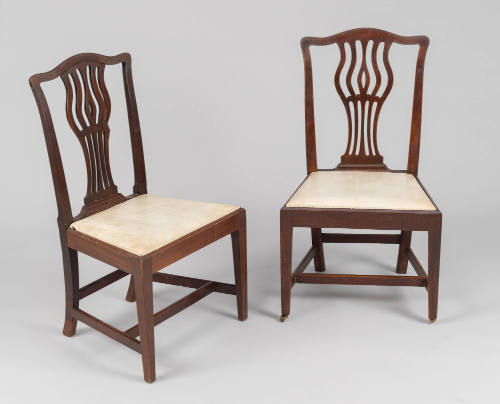
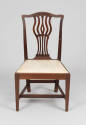
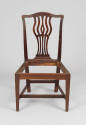
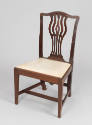
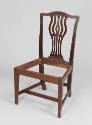
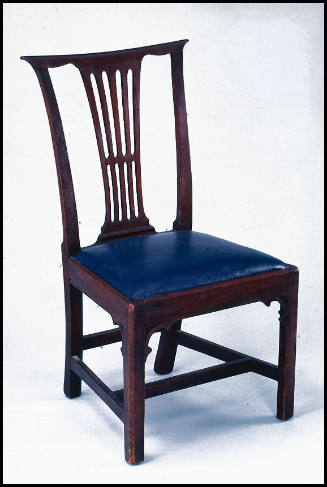
Side Chair
Date1780-1800
MediumMahogany, yellow pine, tulip poplar (modern on chair .2), brass (later addition)
DimensionsOH: 38 1/8”; OW: 21 ¼”; OD: 19 ¼”
Credit LineGift of Helen Don
Object number2024-245,2
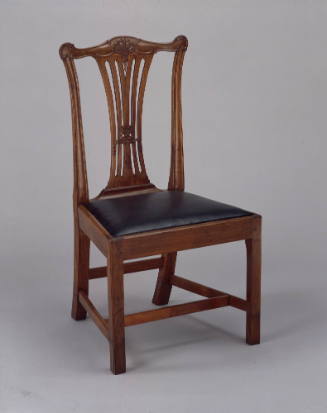
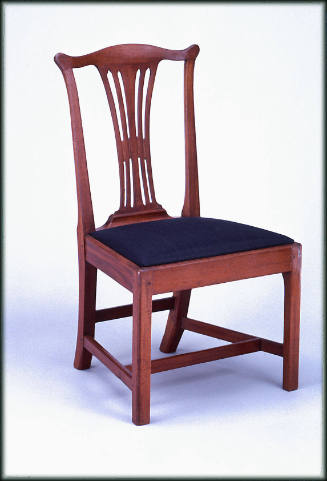
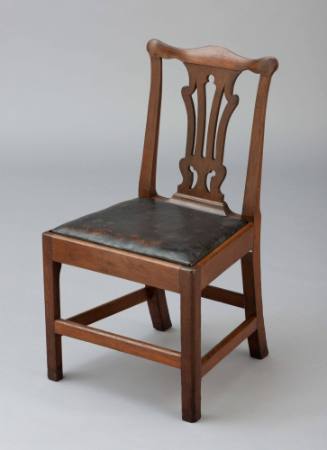
DescriptionSplat-back side chair; plain serpentine crest rail over pierced splat tenoned into crest rail and shaped applied shoe; splat is baluster shaped at top with narrower base below, pierced with four lozenges echoing the exterior shape of the splat at top, with vertical ovoid center piercing, over four vertical piercing in lower half of splat echoing the splat’s exterior shape; crest rail and stiles flat on front face with scratch bead around perimeter, rounded on rear; trapezoidal seat with upholstered slispeat; seat rails with molded top edge; four straight, tapered legs, chamfered on inner corners, rear legs kick toward back, with side, rear, and medial rectangular stretchers; quarter round corner glue blocks; yellow pine joined seat frame.Label TextThe basic pattern for this chair originated not in America but in Britain, a fashion force that continued to make itself felt in Virginia and other coastal states long after political independence was won. Designs for household furniture were still being transmitted across the Atlantic in the published pattern books of the day and by way of British craftsmen who continued to emigrate to the former colonies in some numbers.These chairs descended as part of a large sert in the Talbot family of Talbot Hall, Norfolk, Virginia, and likely were produced in the area.Mark(s)Marked “III” on front of front block of rear seat rail; Slipseat marked “V” and “III”.ProvenanceDescended in the Talbot family of Talbot Hall, Norfolk, VA to Caroline Brackenridge Talbot [1925-2024] (Williamsburg, VA); 2024, given to The Colonial Williamsburg Foundation (Williamsburg, VA).
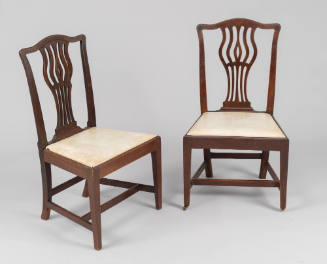
1780-1800
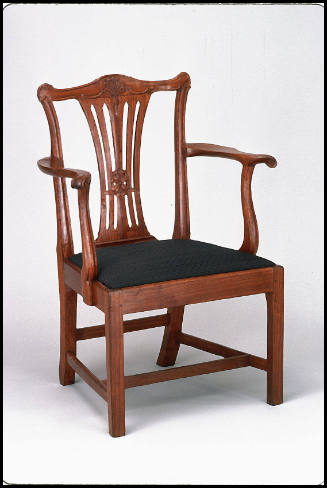
ca. 1780
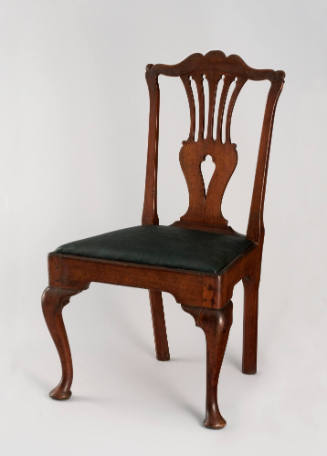
1750-1760
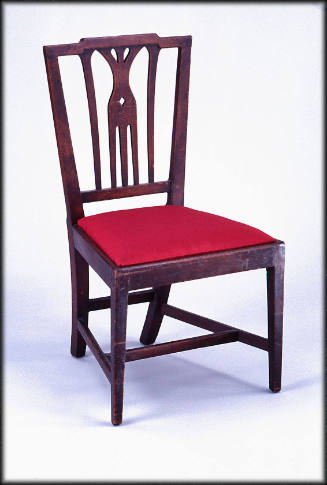
ca. 1790
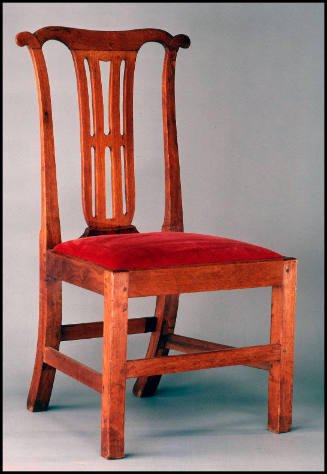
1750-1770
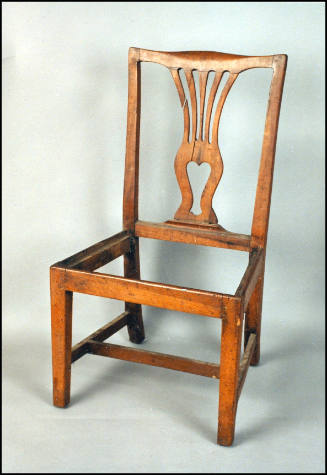
ca. 1780
1760-1780
1771-1776