
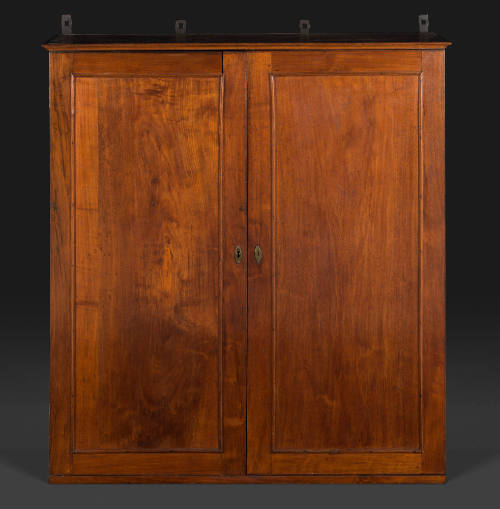
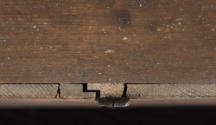
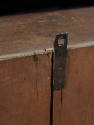
Hanging Bookcase
Date1806-1815
Maker
John Hockaday
MediumBlack walnut, yellow pine, iron, and brass
DimensionsOH: 42 in. (with iron straps, H: 43 3/4 in.); OW: 39 in.; OD: 8 1/2 in.
Credit LineGift of Robert S. Barlowe, Jr.
Object number2025-46
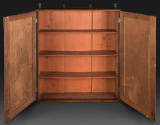
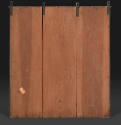
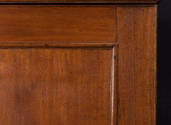
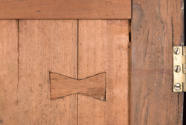
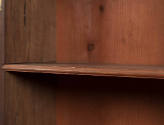
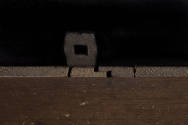
DescriptionAppearance: Rectangular bookcase with flat top, small molding along the front and sides around top; two flat paneled doors hinged to case with butt hinges; doors have scratch-bead line around edges of doors, with the exception of the inner stile on the proper left door, and a molding with a single bead nailed around panel; both doors have simple brass keyhole escutcheon, the proper right door contains the lock; proper left door has brass upper and lower thumb bolts to secure door to top and bottom boards when closed; interior of case has three removable yellow pine shelves each with a bead along their front edge; interior of backboards and shelves have a red, “pinking” wash; four iron straps each with a large hole at the top are screwed to the backboards and extend above the top board, outer two straps are mortised into the backboard, inner straps sit on top of the backboards. Construction: Sides half blind dovetailed to top and bottom. Top and bottom boards are formed by yellow pine boards faced with about 2” of walnut butt joined to front. Cornice molding, mitered at corners, is nailed to sides at top and to front edge of top board. Two vertical yellow pine backboards are lapped and third is butted against the middle board; Backboards are nailed to rear edges of top and bottom boards and in rabbets in rear edges of sides. Backboards have a very slight chamfer on the top and bottom exterior edges. Three dados inside sides house yellow pine shelves. Shelves have single, integral bead along front edge; shelves and inside of backboards are stained red or “pinked.” Doors hinged to front edges of sides with pairs of brass butt hinges. Doors are constructed with rails tenoned and wedged through stiles. Flat panels are rabbeted around their front edges and sit in dados in front inner edge of rails and stiles. Mitered single bead molding nailed to front of rails and stiles around and overlapping panel. Plugs at ends of door stiles fill exposed, empty portion of dados. Proper right door panel formed by two boards with 2 butterfly cleats on the inside holding the butt-joined boards together. Scratch bead around the perimeter of doors, but not on inner edge of proper left door. Doors have rabbets cut in inner edges so that the proper right door overlaps the proper left door when closed. Proper right door has a lock. Proper left door has brass thumb bolts to secure doors to top and bottom boards when closed. Four iron straps are screwed to the back of the bookcase at the top. The two outer straps are mortised into the backboards. The two inner straps are on top, ie not mortised in.Label TextSt. George Tucker owned six hanging bookcases in his home in Williamsburg, three in the study and three in the passage, when he died in 1827. This example, which descended in his family until a descendant donated it to Colonial Williamsburg, was made by Williamsburg cabinetmaker John Hockaday between 1806 and 1815 and likely represents the basic design of most of Tucker's hanging bookcases. Hockaday made and repaired a number of pieces of furniture for Tucker in the ealry 19th century including a chest of drawers (2008-21). Tucker's accounts with Hockaday survive in Swem Library at the College of William and Mary.Inscription(s)Modern Ink inscription on octagonal white and red ("jelly") label on rear of backboards "Mad...order/ of St. Geo Tucker"ProvenanceDescended in the Tucker family from St. George Tucker. The bookcase remained in the St. George Tucker house in Williamsburg until 1992. Line of descent: St. George Tucker (1752-1827) and Frances Bland Randolph Tucker (1752-1788); to son Nathaniel Beverley Tucker (1784-1851); to daughter Cynthia Beverly Tucker Coleman (1832-1908); to son George Preston Coleman (1870-1948); to daughter Dr. Janet Coleman Kimbrough (1902-1992); to grandson Robert S. Barlowe Jr.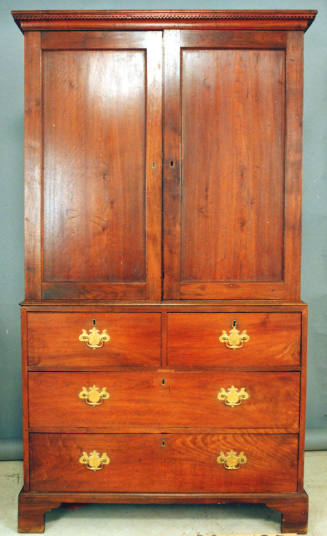
ca. 1775
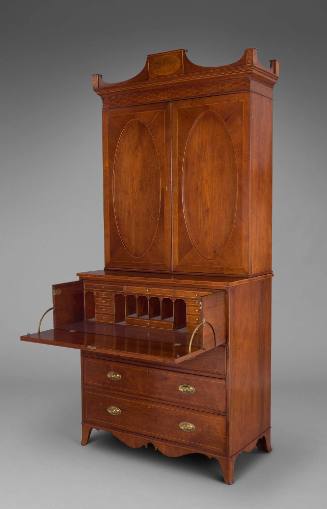
ca. 1800
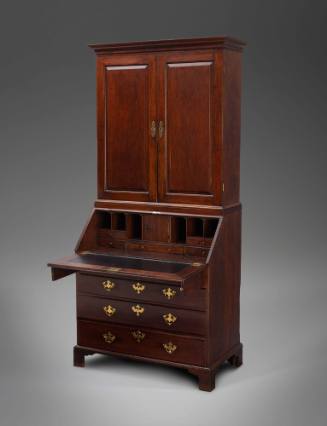
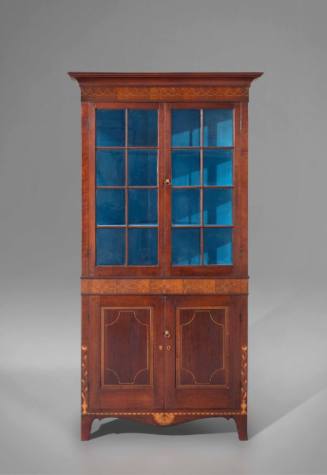
1800-1816
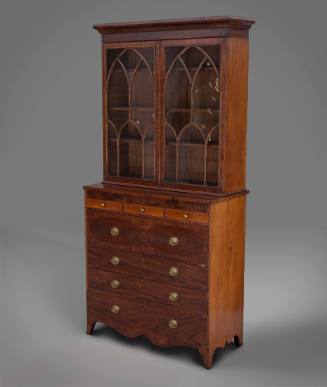
1800-1815
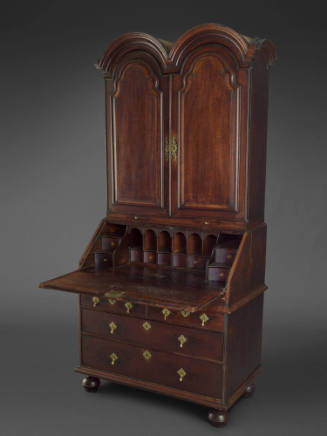
1700-1730
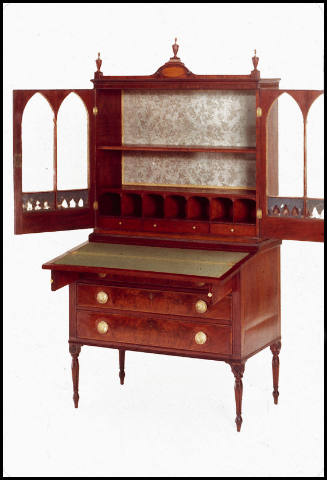
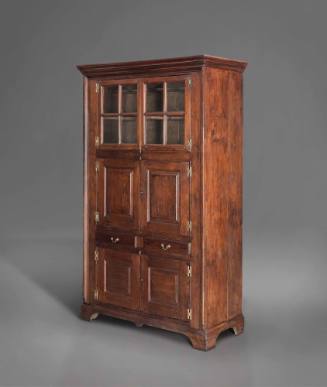
1765-1780
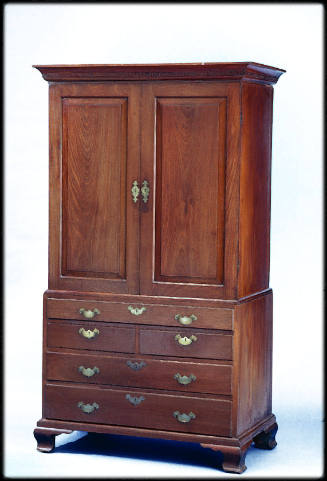
1760-1780
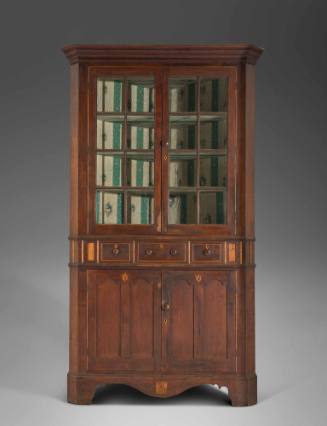
1815-1830
1800-1815