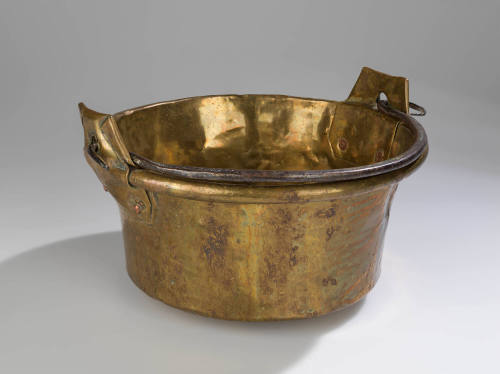
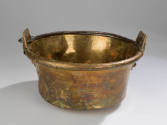
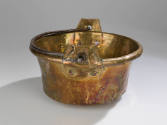
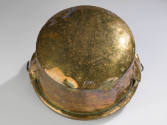
Trade Kettle
Dateca. 1650-1800
OriginEurope or Britain
MediumCopper, brass, and iron
DimensionsDiameter at rim: 9"; Height to top of ear: 5 1/2"; Height to top of rim: 4 3/8"
Credit LineGift of Bruce and Barbara McRitchie
Object number2025-25
DescriptionCircular kettle with its rim rolled around a stout iron ring, slightly tapering sides, and sheet brass ears with bent-down corners and rolled copper rivets. Its wrought iron bale is tapered towards the ends, each of which is curled upwards through the ears.Label TextKnown as "trade kettles" today, these copper or brass cooking vessels were used by almost everyone in North America from the 17th thru19th centuries. Lighter and more durable than their cast iron counterparts, they were available in different sizes and meant to "nest" into the next size up. Another, nearly identical kettle in Colonial Williamsburg's collection (1956-172) fits perfectly into this example.Fragments of sheet metal kettles are amongst the most commonly found copper or brass relics found in early American archaeological sites.
Native Americans, often preferring their own earthenware cooking vessels, also saw a trade kettle as a source of valuable material; sheet copper or brass could be cut up into projectile points or rolled into ornamental tubes, while the iron bales could be worked into tools like awls. For European Americans, once they were battered beyond repair, these kettles were similarly scrapped for other purposes.
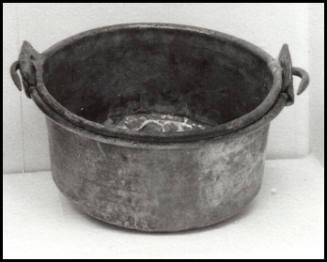
ca. 1650-1800
1760-1775
1691-1715
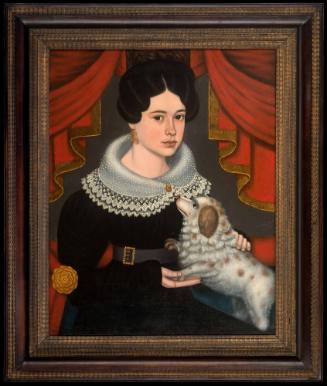
Lyman Parks (formerly known as the Wilkinson Limner)
Probably 1827-1830
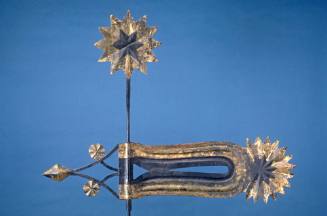
1800-1825
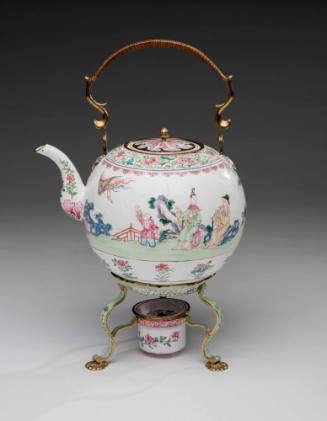
ca. 1760
1843 possibly