Wig
Date1790-1840
OriginEurope
MediumCotton, linen, iron, horsehair, silk
Credit LineMuseum Purchase
Object number2023-1
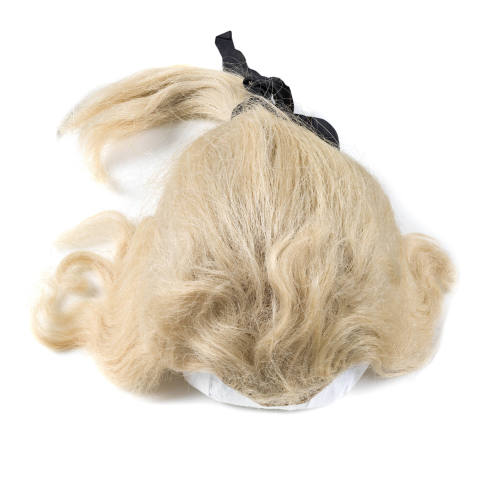
DescriptionA white horsehair wig. The wig was stitched to a cotton netted caul outlined in beige linen measuring between 1-1.5 inches wide. A total of 7 ferrous metal, probably iron stays, located around the sides and back of the cull. Approximately 60 rows of hair, woven in a standard M redoubled pattern are attached to the caul of wig in varying degrees from .25 to .5 inches apart. The wig comes to a point at the forehead. The sides were probably curled into buckles or side curls, but have now lost their shape. The back of the wig shows evidence of a possible braid, but how has been tied back into a que.Label TextWigs were popularly worn starting in the late 17th century and falling out of fashion by the late 18th century. However, wigs did fossilize into fashion for some members of society, such as lawyers, liveried servants, and footman. This horsehair wig may have been used by liveried servant or footman during the early part of the 19th century.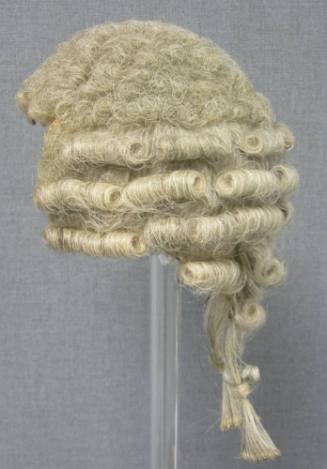
1817-1830
1710-1730
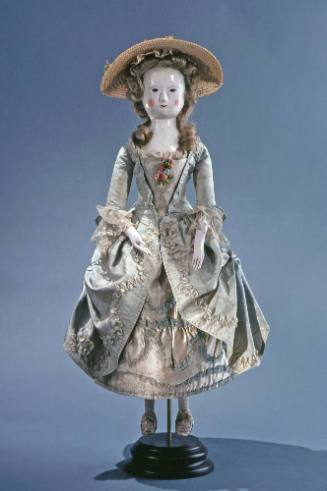
1770-1775
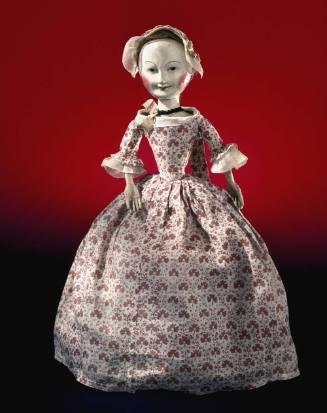
Early 18th century, clothing probably 1770-1780
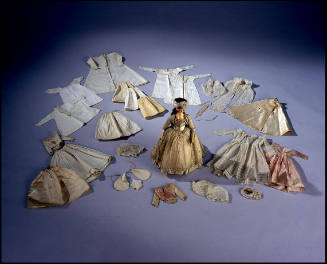
ca. 1790
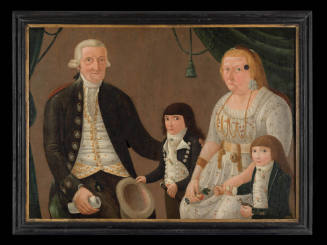
ca. 1795
1765-1810
1817-1830