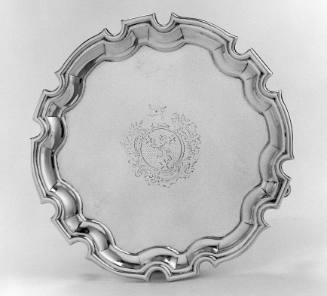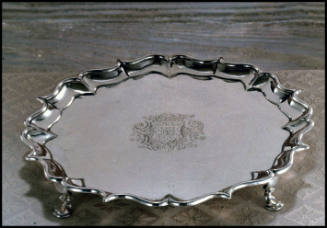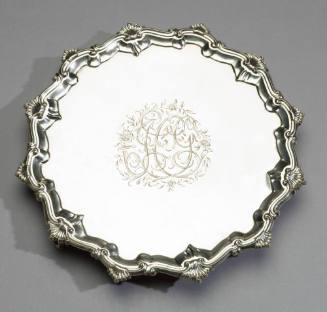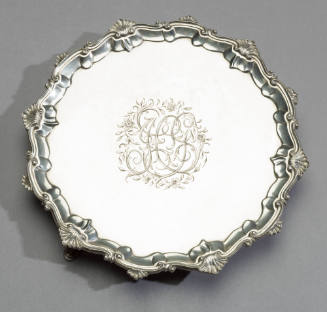
Salver
Date1736-1737
Artist/Maker
Robert Abercromby
OriginEngland, London
MediumSilver (Sterling)
DimensionsH: 1 3/16"; D: 9 9/16"
Credit LineMuseum Purchase
Object number1954-329
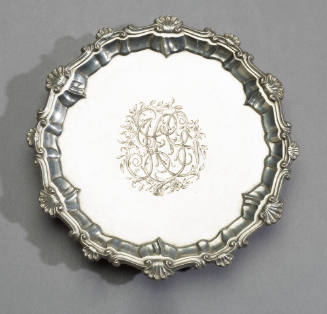
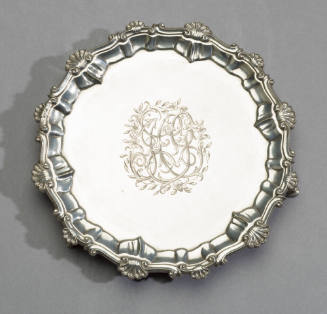
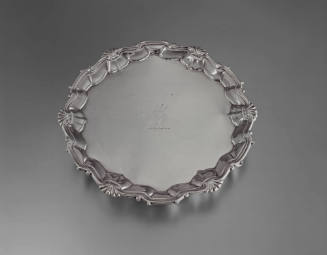
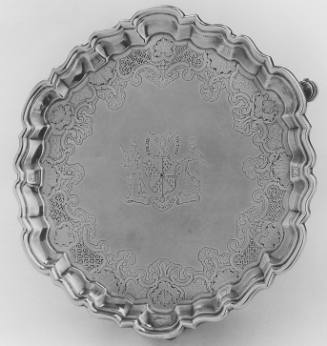
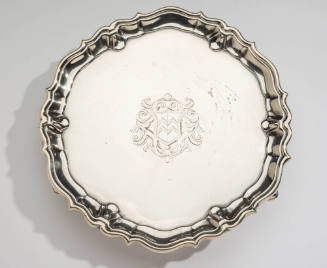
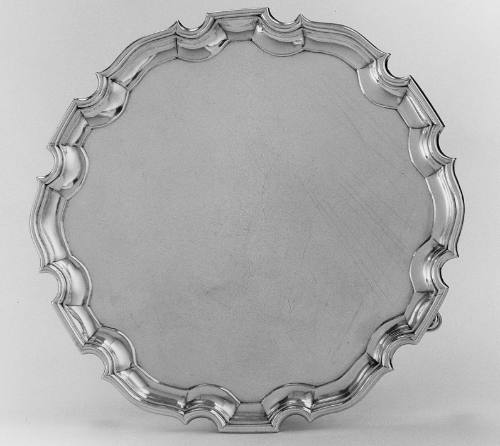
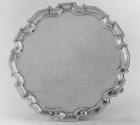
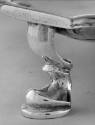
DescriptionSalver: circular; cast half-round bead molding forming rim of scalloped outline on short inclined concave sides of conforming plan; broad flat base supported on three short cast reversed double C-scroll legs terminating in hoof feet.Label TextDuring the middle decades of the eighteenth century, most salvers were of circular plan and scrolled outline with short inclined sides raised from the same piece as the bottom and with a narrow, cast and applied molding at the edge for strength and appearance. This border pattern, misleadingly referred to within the trade as "Chippendale," probably because of its close similarity to that of the tops of tripod tea tables, was particularly popular during the 1730s.Many of the standard salver types during that period were made by specialist makers, such as Robert Abercromby, the maker of this salver, William Peaston (1945-16),John Swift (1965-115), and Ebenezer Coker (1965-151 and 1954-18), among others. A larger and less conventional salver of 1735/36 by Robert Abercromby, engraved with the arms of the Randolph family of Virginia, is privately owned in Richmond.
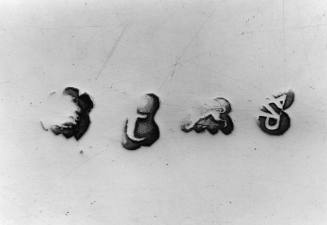
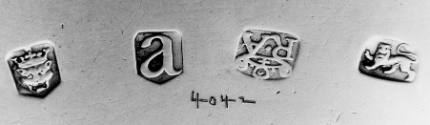
Inscription(s)NoneMark(s)Maker's mark "RA" in block letters with a crown above within a round-head rectangle, leopard's head crowned, lion passant, and date letter on underside of base.ProvenanceVendor: Museum of Fine Arts, Boston
.