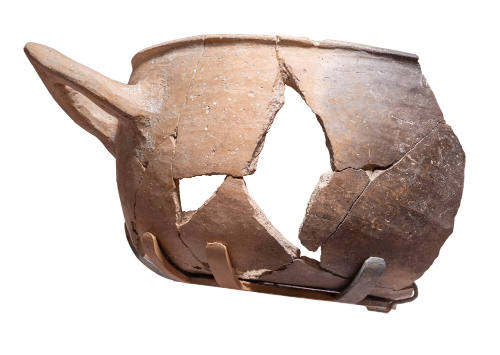
Cooking Pot
Date1700-1765
MediumEarthenware (colonoware)
Object numberOBJ-02PB-01074
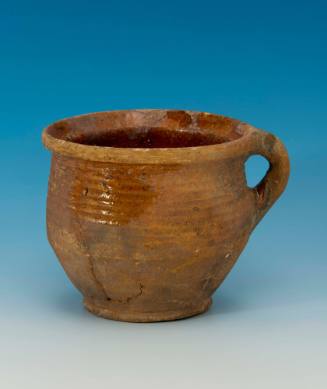
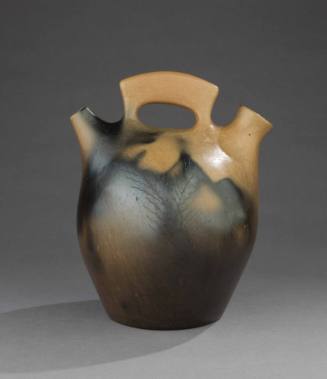
DescriptionLarge colonoware vessel with a flat base, slightly bulbous body profile and everted rim, possibly a very large pipkin or cooking pot. The vessel is likely of coil-built construction. The handle is angular in shape and appears to be of "riveted" style attachment to vessel.Label TextColonoware is a hand-built, unglazed, and usually undecorated ceramic created from local clays. It is believed to be a hybrid of African and American Indian potting traditions and may have been produced by both cultures in the 18th century. In the Chesapeake region, the wares often mirrored utilitarian European forms such as chamber pots, pipkins, porringers, and bowls. There are accounts of colonoware being hawked in the streets of Charleston, South Carolina, and a 1769 record lists its purchase for use in Williamsburg's Governor's Palace. Intact vessels are today almost unknown, but fragments are found archaeologically throughout Williamsburg and the surrounding counties. This pot was excavated at the site of the Hubbard House on Francis Street.
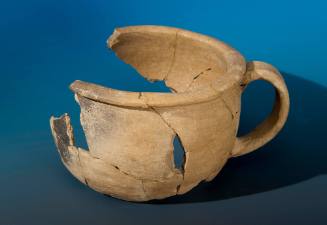
1720-1760
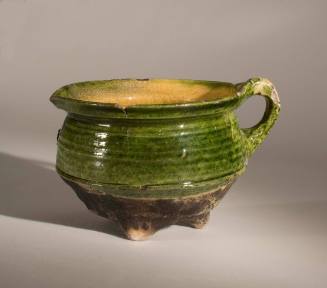
1610-1650