
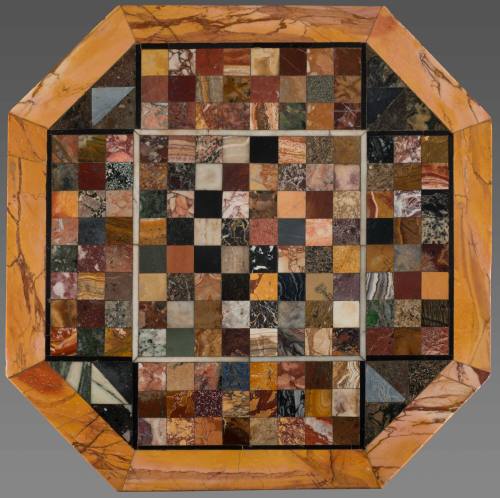
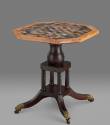
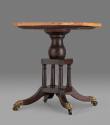
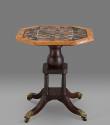
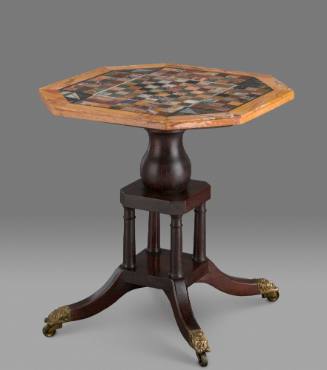
Marble Chess Table Top
Date1819
OriginEurope, Italy, Rome
MediumSlate, marble, limestone, lapis lazuli, malachite, and other stones
DimensionsOH: 1"; OW: 24 ¾”; OD: 24 7/8”
Credit LineMuseum Purchase, TIF Foundation in memory of Michelle Iverson
Object number2015-341,B
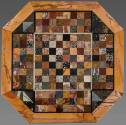
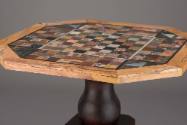
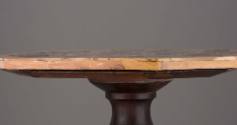
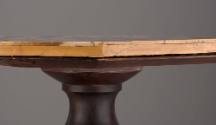
DescriptionOctagonal stone table top; octagonal slate bed, sides longer than corners, with small polychrome square stone pieces arranged in checkerboard style in center outlined in white, similar arrangement of small square stone pieces extend towards sides, outlined in black, leaving triangular sections at each corner with small triangular shaped stone pieces; entire top bordered and edged in long marbled orange stone pieces.Appears to be a game board design for 4 person chess: three additional rows of squares extend out from the central board along each side.Label TextJohn Hipkins Bernard ordered this stone "mosaic" table top while he was in Rome in the spring of 1819. Described in documents as a "marble slab," it was shipped from Naples to New York, arriving in the spring of 1820, and transshipped to Fredericksburg, Virginia shortly thereafter. John and Gay Bernard had the base for the table constructed by local cabinetmaker John C. Bowie and or his brother Walter Bowie once the top arrived in Port Royal in 1820.
“Specimen” tables, ie tables with various marble and stone specimens arranged in the top, were popular souvenirs from Grand Tours of this period. Many had larger round tops, but a good number of octagonal table tops, often with game boards in the center like this example, were brought back by English or American tourists. E. H. Derby returned to Salem, Massachusetts in 1800 with “Curiosities from Italy he had collected. The marble & inlaid tables, the Bustos, & the Coins & the rich engravings…to introduce works of Taste into this Country.” Edward Colman had “2 Italian Marble Tables” valued at $250 in his Philadelphia parlors in 1841. Very few specimen tables with American bases are known, and even fewer have known family histories.ProvenanceDescended in the Robb-Bernard family of Gaymont, Port Royal, Virginia. Line of descent: John Hipkins Bernard (1792-1858) and Jane Gay Robertson Bernard (1795-1852); to daughter Helen Struan Robb (1836-1901); to son Philip Lightfoot Robb (1878-1965); to dauther Eugenia Van Dyke Robb (c.1923-2015).
Originally owned by John Hipkins Bernard (1792-1858) and wife Jane Gay Robertson Bernard (1795-1852). Left as a legacy from Jane Gay Bernard to daughter Helen Straub Bernard (1836-1901) who married Philip Lightfoot Robb in 1865. "To dear Helen her Father and myself think as she is the only chess Player she will most use the marble chess Table." (Swem Library, Bernard-Robb papers, Mss. 65 R54, box 2, folder 4, item 3 legacies of Jane Gay Bernard).
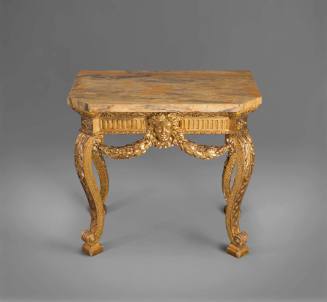
ca. 1735
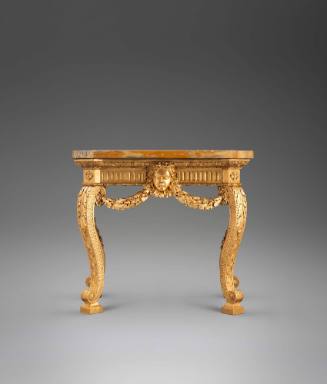
ca. 1735
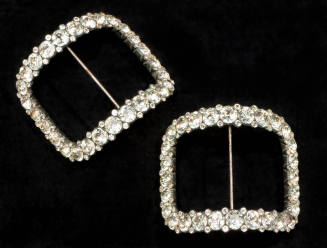
1795-1805
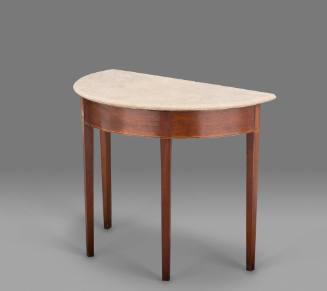
1805-1815
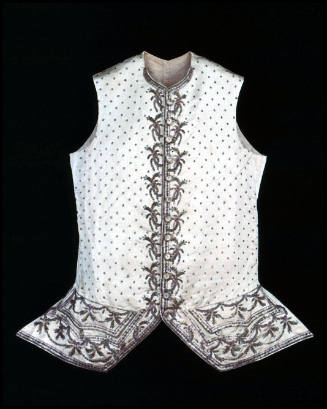
1770-1780
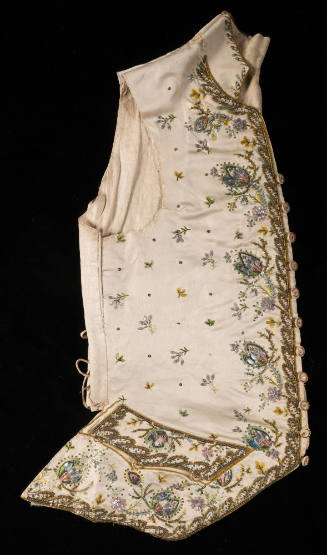
1790-1800
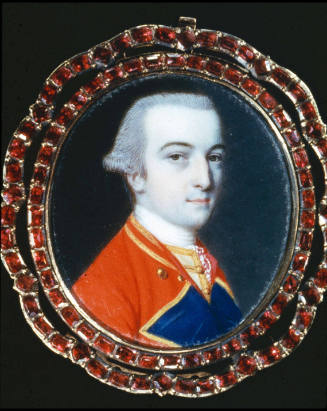
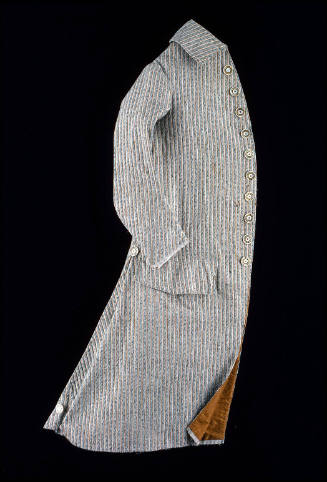
1775-1790
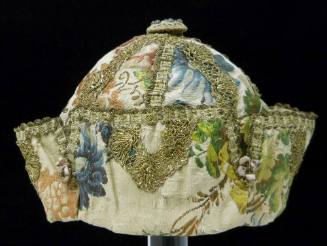
1730-1750, later button
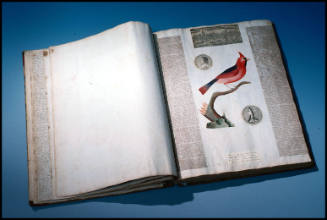
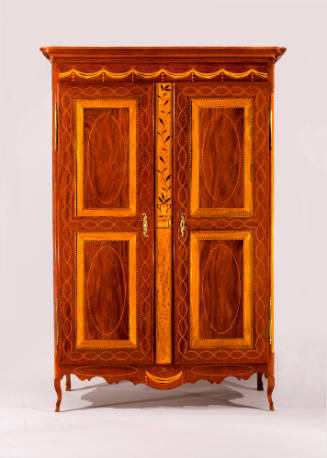
1800-1820