
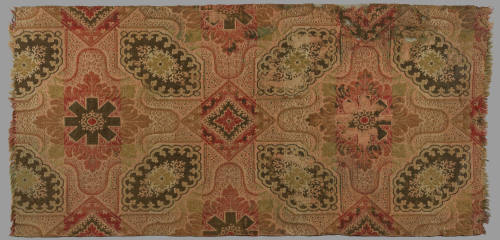
Carpet
DateCa. 1850
OriginGreat Britain or America
MediumWool
Credit LineGift of Eileen Jonas
Object number1980-26
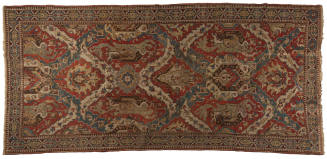
DescriptionThis wool carpet fragment is polychromed with a floral and geometric design. It has fringe on the top and bottom edges and is stitched on the left and right sides. There are three 3 central designs that make up the piece with offshooting hexagon-shaped motifs.Construction History
Ca. 1850: Initial construction
1991: Restorative treatment in preparation for exhibition by CWF (Williamsburg, VA)Label TextDouble and triple-cloth woven carpeting belongs to a distinctly British (and beginning in the 19th-century, American) textile tradition often referred to as "ingrains." These reversible fabrics were often woven in narrow widths, either used in single panels for stairs, halls or bedsides, or sewn together to make room-size carpets. Though intitally imported from Britain in large quantities, American carpet manufactories began weaving their own ingrains. This American industry was further advanced by Erastus Bigelow's invention of the power loom in the 1840s and the subsequent capacity for mass production. Ingrains are also known as Scotch, Kidderminster, and Kilmnarock carpeting, named for areas with high levels of production.
This particular fragment is triple-cloth, which is usually higher quality than double-cloths. Intricate floral patterns are typical of ingrain/Scotch carpeting, evident in many surviving examples.ProvenancePrior to 1980, Eileen Jonas (Champlain, NY); 1980-present, gifted to The Colonial Williamsburg Foundation (Williamsburg, VA)
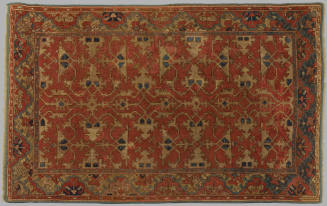
17th or 18th century
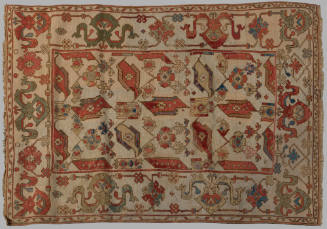
Probably 17th century (original parts)
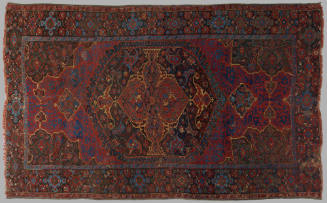
18th c.
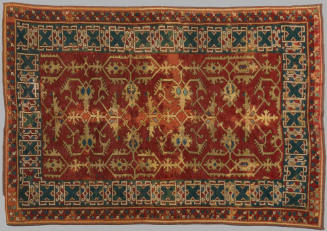
Probably late 17th century
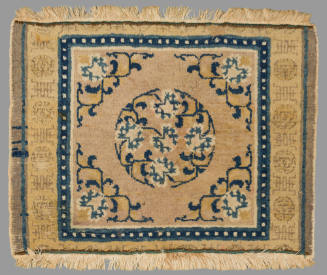
Late 19th-early 20th century
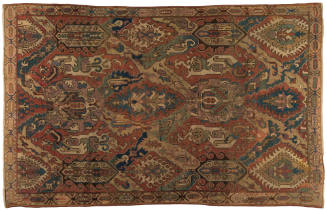
18th century
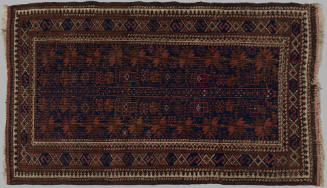
19th century
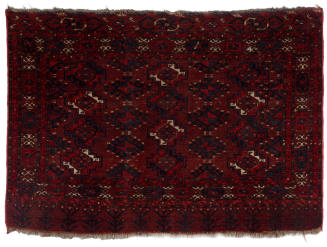
Late 19th or early 20th century
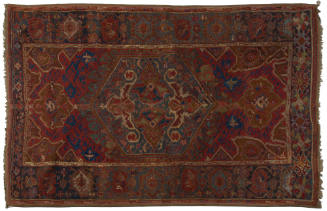
18th century (possibly)
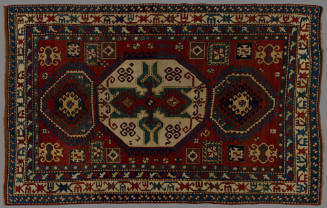
Ca. 1820-1830
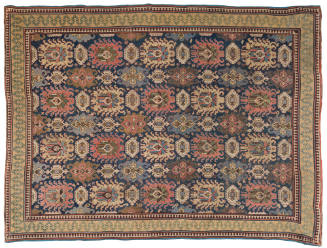
19th century
18th century