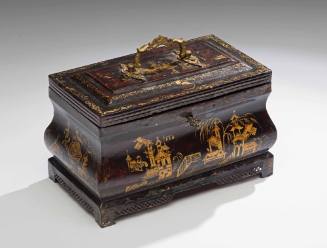
Tea Chest
Date1740-1760
OriginEngland
MediumMahogany, oak, brass, velvet, lead, paper
DimensionsOH:6 1/4"; OW:10"; OD:6 1/8"
Credit LineMuseum Purchase
Object number1936-270
DescriptionTea chest: oblong rectangular form; brass bail handle with ball-shaped posts and two plain circular backplates bolted through center-top of cover; rectangular cover with flat top with cove transition to short straight sides; cover molded at edge of top, at base of cove transition, and at lower edge; interior top of cover lined with red velvet; cover hinged to shaped rectangular body of bombe type with front, back, and sides swelled; interior divided into three equal compartments across front with removable partitions and narrow compartment of shallow depth across back; end compartments in front lined with red velvet; pierced brass keyhole escutcheon of scrolled design attached with nails to front of body; applied molding at base of body; thin triangular blocks on underside of base to accomodate feet (missing).Mahogany with oak base; brass handle, keyhole escutcheon, hinge plates, and casing for lock with some steel parts. Interior of cover and narrow compartment to rear of main compartments partially lined with red velvet; side compartments lined with lead foil on cardboardLabel TextBoxes of this sort with multiple containers for tea often are called "tea caddies." In the eighteeth century, however, they were referred to as "tea chests." "Tea chest" refers to "a small kind of cabinet in which tea is brought to the table. Dean Swift, in his DIRECTIONS TO SERVANTS (1729), wrote of "small chests and trunks, with lock and key, wherein they keep the tea and sugar;" and Mrs. Delany in 1740 spoke of a "very neat tea chest" she had got for a friend "which shall be filled with tea and delivered to her."Mark(s)None foundProvenanceNone known
1755-1770


1700-1720
1705-1715
1650-1675

1810-1840
1700-1727

1820-1840
1760-1780